




What 900+ Real Questions Reveal About How Retail Marketers Are Using AI
Everyone has a point of view on AI in marketing. But most of it is still theoretical, like predictions about how teams might work, or frameworks for what AI could unlock. What’s missing is something simpler, and more valuable:
What happens when retail marketers actually start using AI in their day-to-day work?
We analyzed hundreds of real interactions with Bluecore’s Marketing Agent since the launch a few weeks ago, spanning more than 100 marketers across a wide range of brands.
The results: a clear shift in how marketing work is getting done.
The Shift: From Reporting to Decisioning
For years, marketing teams have been structured around answering one core question:
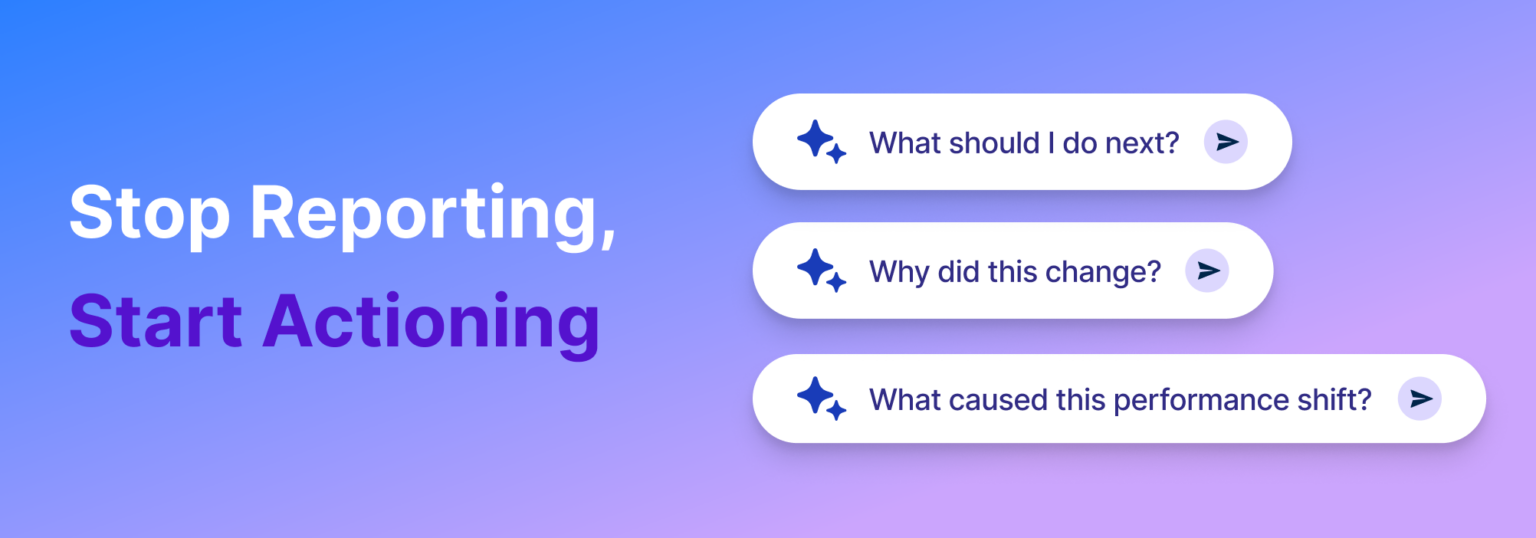
What happened? What was our open rate? How did revenue perform? Which campaign drove the most clicks? But that’s not what marketers are asking anymore.

This isn’t a subtle evolution. It’s a fundamental change in expectations. Reporting is no longer the goal. Decision-making is.
Insight #1: Metrics Aren’t Enough. Marketers Want Explanations
A significant share of questions focused on performance, but not in the way most dashboards are built.

This signals a shift from passive monitoring to active diagnosis. The modern marketer doesn’t just need visibility, they need clarity.
Insight #2: Analysis and Action Are Collapsing Into One Step
Historically, insight and execution have been separate steps: Pull the data → Analyze performance → Decide what to change → Execute.
That process is breaking down.

In other words: The distance between “what happened” and “what should we do” is disappearing. AI isn’t just accelerating analysis, it’s compressing the path to action.
Insight #3: High-Impact Users Go Deep, Not Just Wide
Adoption isn’t evenly distributed, and that’s what makes it meaningful. In the data, a subset of users drove a large share of interactions, often across multiple brands or business units in short timeframes.

This behavior points to a new type of marketer: Operators who don’t just consume insights, they compound them.
Insight #4: Retention and List Health Remain Core, But Now in Real Time
Despite all the focus on AI, the core questions haven’t changed.
Marketers are still deeply focused on:
- List growth and decline
- Subscriber acquisition vs. churn
- Year-over-year performance of owned channels
What has changed is how quickly those questions get answered, and acted on. Instead of building reports or waiting on analysis, marketers are evaluating list health, diagnosing changes, and identifying drivers in near real time. First-party data strategy hasn’t become less important. It’s become more operational.
What This Means for Retail Marketing Teams
The implications are straightforward, but not small.
- Reporting is no longer a differentiator: If your team is still spending time pulling dashboards and stitching together performance views, you’re already behind.
- Speed to decision is now a competitive advantage: When answers, and next steps, can be surfaced in seconds, the teams that act fastest will win.
- The role of the marketer is expanding: The job is no longer to analyze performance. It’s to understand it, act on it, and continuously improve it.
A New Standard Is Emerging
AI in retail marketing isn’t just about automation. It’s about raising the baseline for what marketers can, and should, expect from their tools. Not just answers. Not just insights.
But clear, immediate direction on what to do next.
Because the future of retail marketing won’t be defined by who has the most data. It will be defined by who can turn that data into decisions, fast enough to matter.


